
Pacific Union College’s Paramedic to RN Program Provides New Pathway for Students
By Keegan Malan on April 20, 2026
Share this
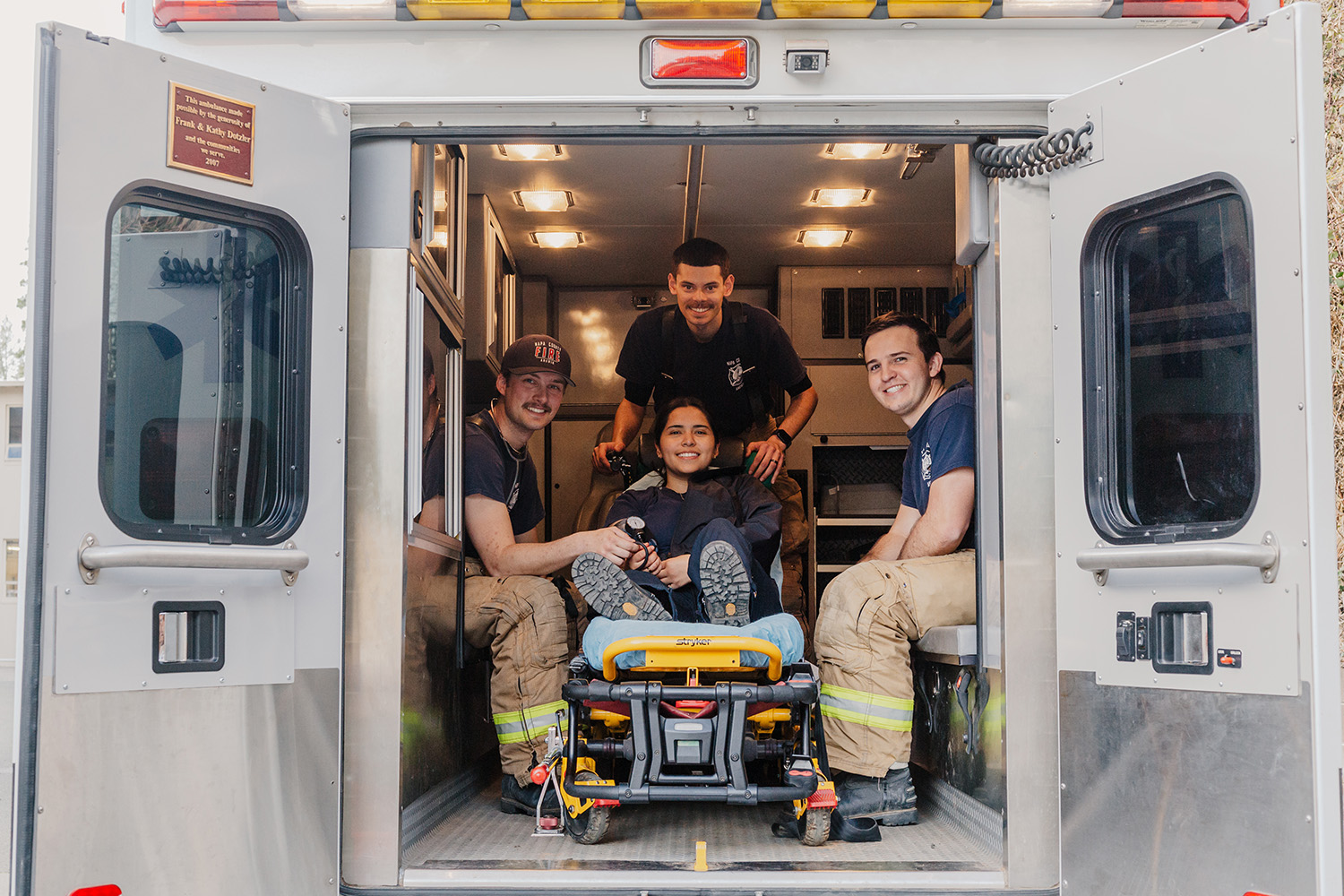
Pacific Union College has achieved great success in its Paramedic to RN program, allowing up to 9 EMT-P students annually to join its already well-established LVN/Med-Tech-to-RN program, and will graduate the third cohort this June. Since the program’s launch in 2022 and enrollment increase in 2023, it has filled a significant need in the job market, enabled PUC to expand its services, and also bridged the gap for paramedics looking to advance their education and careers.
A key figure in this development is Cori Carlson, a paramedic who earned a Master of Science in Nursing and started teaching in a local paramedic program. Recognizing a significant gap in educational opportunities for paramedics seeking to transition into nursing, she approached PUC to explore the possibility of creating a dedicated pathway. Her vision was instrumental in bringing the EMT-P to RN program to life. Today, Carlson continues to play a vital role as an adjunct faculty member, teaching the required seven-day EMT-P to RN Bridge course that prepares incoming students for the expectations of the nursing curriculum.
PUC is one of only two colleges in Northern California to offer EMT-Ps an advanced-placement pathway to earn an Associate of Science in Nursing (ASN), with the option to seamlessly continue into the RN-to-BSN program. EMT-P students integrate directly into the second year of the nursing curriculum alongside LVN/Med-Tech students, building and advancing their scope of practice.
The 18-month EMT-P to RN program is designed and grounded in adult learning principles, allowing students to continue balancing full-time employment, family responsibilities, and academic advancement. Its session-based format enables students to maintain full-time employment while progressing through a rigorous nursing curriculum that meets all professional standards. Students also have access to a full range of PUC support resources, including library services, tutoring, counseling, and academic advising.
Accessibility is a defining strength of the program—not only in its format but also in its location. Many prospective students were forced to travel long distances or even relocate out of state to pursue their goals. By offering this pathway in Napa, PUC has significantly reduced those barriers, making advanced nursing education more attainable for paramedics across the Bay Area and Central Valley.
Debra Wallace, who has directed the LVN/Med-Tech program for 28 years and now oversees the EMT-P pathway, reflects on the program with pride, “I truly love this program and the students in it. They bring a depth of experience, strong focus, and an incredible level of commitment as they balance work, family, and school. It is inspiring to watch their growth as they transition into professional nursing roles.” She adds, “These students are highly motivated and bring a unique perspective to patient care. They understand urgency, critical thinking, and teamwork at a high level, and it is rewarding to help them expand those skills within the nursing profession.”
To date, the Napa campus has graduated two cohorts of EMT-P to RN students, both achieving a 100% first-time pass rate on the NCLEX-RN. A third cohort is expected to graduate in June 2026. The success of this program has made a meaningful impact: expanding access to nursing education, supporting career advancement for paramedics, and, ultimately, strengthening the healthcare workforce across the region.
Latest News
Pacific Union College Welcomes Brandon Broome as New Athletic Director
By Marina Maher on October 5, 2026
PUC Alumna Creates Bible Busy Boards
By Ally Romanes on October 1, 2026
PUC Appoints Anthony Cadavid as MBA Director
By Ally Romanes on September 30, 2026
Abraham Garrido's 100-Mile Race in Europe
By Marina Maher on September 28, 2026