
Laura Wibberding Presents Adventist History at Religious Liberty Summit
By Ally Romanes on March 13, 2026
Share this
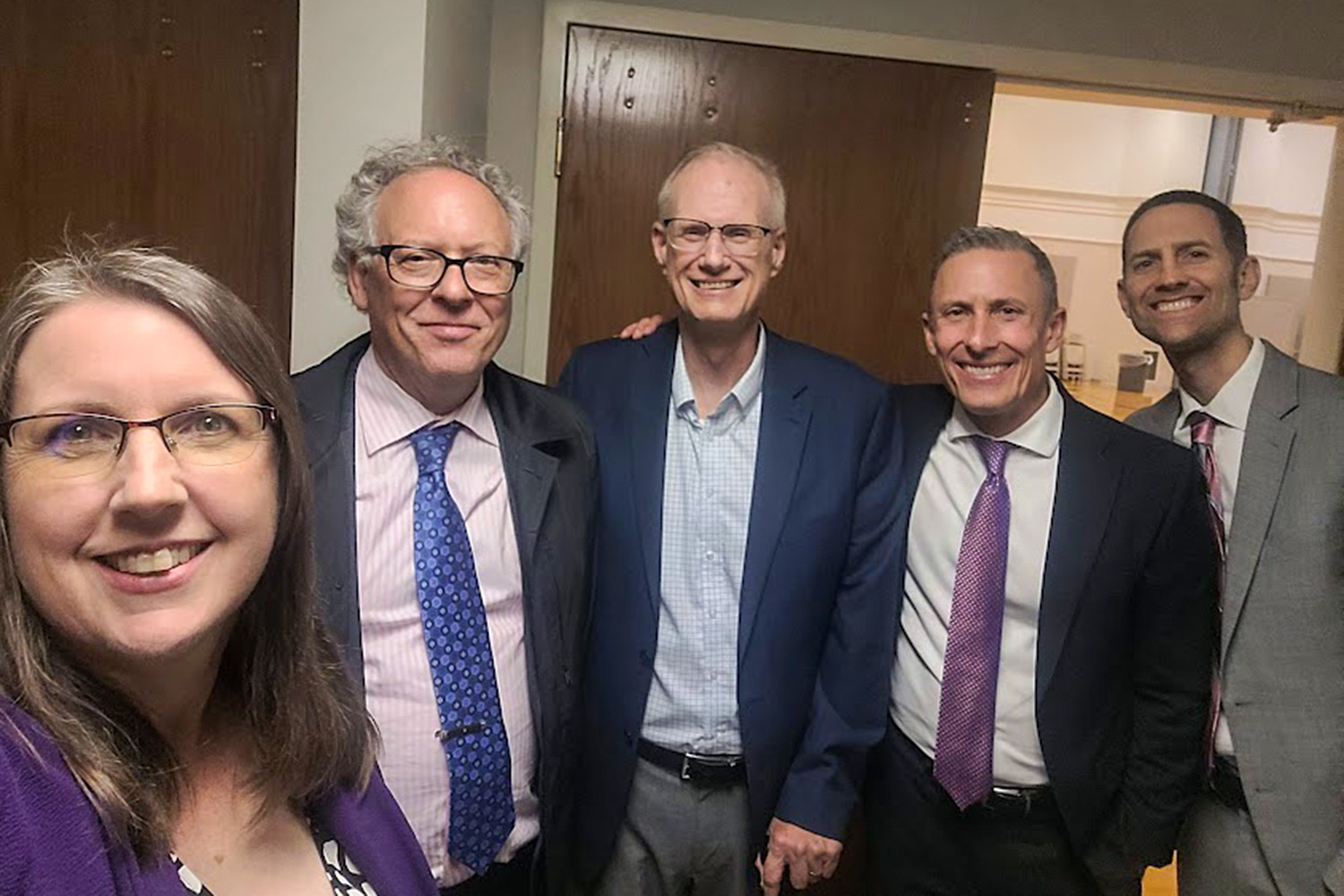
On February 7, Laura Wibberding, chair of the history department at Pacific Union College, delivered a presentation about the history of Seventh-day Adventists at the Interfaith Religious Liberty Summit main event in Salt Lake City, UT. This was her third time speaking about Adventist history for a religious liberty event, having previously spoken in November at the Religious Liberty Summit at the Paradise Adventist Church and in October at the Religious Liberty Breakfast hosted by the Northern California Conference.
The Church State Council, the Pacific Union Conference’s religious liberty arm organized the event, featuring sermons, presentations, and panel discussions among the Church State Council, Seventh-day Adventist churches, the United Church of Christ, and the Church of Jesus Christ of Latter-day Saints.
At the main event, PUC alumnus and pastor of West Jordan SDA Adventist Church, Adriano Liessi, opened with prayer before Wibberding took the stage. She then spoke about Adventism’s history as a minority within American Christianity and its experience with religious discrimination. “If you look at the old issues of the American Sentinel in the 1880s, Adventists are not just defending their right to keep the seventh day Sabbath,” she said. “We are arguing that no one should be treated unfairly, from Mormons to Chinese immigrants in California. Protecting the rights of conscience, we said, was the foundation of all our other liberties.”
After her presentation, Alan Reinach, a civil rights lawyer and an SDA minister who served as President of the Church State Council, offered his legal perspective and spoke about Adventism’s legal work for religious freedom. The last speakers were a legal counsel from the Mormon Church, who also offered their legal counsel, and a Latter-day Saint historian, who spoke about their experience of religious persecution.
Wibberding and the other speakers sought to highlight the similarities in their churches' experiences with their mixed audience. A panel discussion followed, during which the presenters answered questions on religious liberty from the floor. Wibberding hopes the listeners came away with the idea that religious liberty is for everyone.
“Back in the 1880s, both Adventists and Mormons were outsiders to the U.S. Christians who wanted to ‘Christianize’ America, and so were Catholic Christians, Unitarians, Jewish Americans, atheists, and many others. We had a choice then to either try to prove we belonged ‘in the club,’ or defend the rights of all outsiders, and mostly we chose the latter,” she said. “Today, many evangelical Christians worry over the growth in other world religions in the US—Muslims, Buddhists, Hindus, agnostics, even pagans—and want more establishment for Christianity. We have to decide again if we want to be in the club or speak up for the outsiders. Religious liberty isn’t true liberty unless it applies to us all.
For Wibberding, one of the most essential periods in Adventist history in the domain of religious liberty was the 1880s to 1900s. Despite not being a large group at the time, Adventists tirelessly rallied to make an impact on Americans by going to court, testifying before Congress, and publishing public appeals.
“It’s a good reminder that we really can have an influence on our world,” said Wibberding. “Society is so polarized, and the news cycle can feel overwhelming. It’s tempting to say there’s nothing we can do and withdraw. But if we really care about our neighbors, and if we’re willing to try, we can still make a difference.”
As people expressed how her presentation impacted them, Wibberding was moved to hear about the collaborative relationship between the local Adventist church and the Mormon community. Regardless of religious differences, both congregations showed mutual respect and excitement about working together.
She felt privileged not only to attend the Interfaith Religious Summit but also to be invited to speak for the main event. One impactful moment during her time there was an interaction with Latter-day Saint representatives, who took Wibberding and other Adventists to a Tabernacle Choir performance and toured a local facility.
“I was reminded how very different our beliefs and practices are. But those differences, I believe, make our partnership on freedom of conscience so much more valuable,” she shared. “To know that no matter where we part ways, we care about one another’s liberties is a gift.”
This experience inspired Wibberding to eagerly delve deeper into the Adventist archives and continue learning about the church's history. As past Adventists have influenced communities, she follows their example—and also leads her own. By gracefully demonstrating that, although people may have different beliefs, if one genuinely listens to others, shows kindness, and keeps an open mind, shared values can be learned, achieving mutual understanding—bringing worlds together that religious liberty is for all.
Latest News
PUC Hosts Girls’ Volleyball Tournament
By Ally Romanes on October 21, 2026
PUC’s 2026 Graduating Class Honors Allison Fox
By Ally Romanes on October 20, 2026
Pacific Union College Welcomes Brandon Broome as New Athletic Director
By Marina Maher on October 5, 2026
PUC Alumna Creates Bible Busy Boards
By Ally Romanes on October 1, 2026