
Grebe Monitoring Project Takes Flight Over Clear Lake
By Dr. H. Scott Butterfield on July 28, 2026
Share this
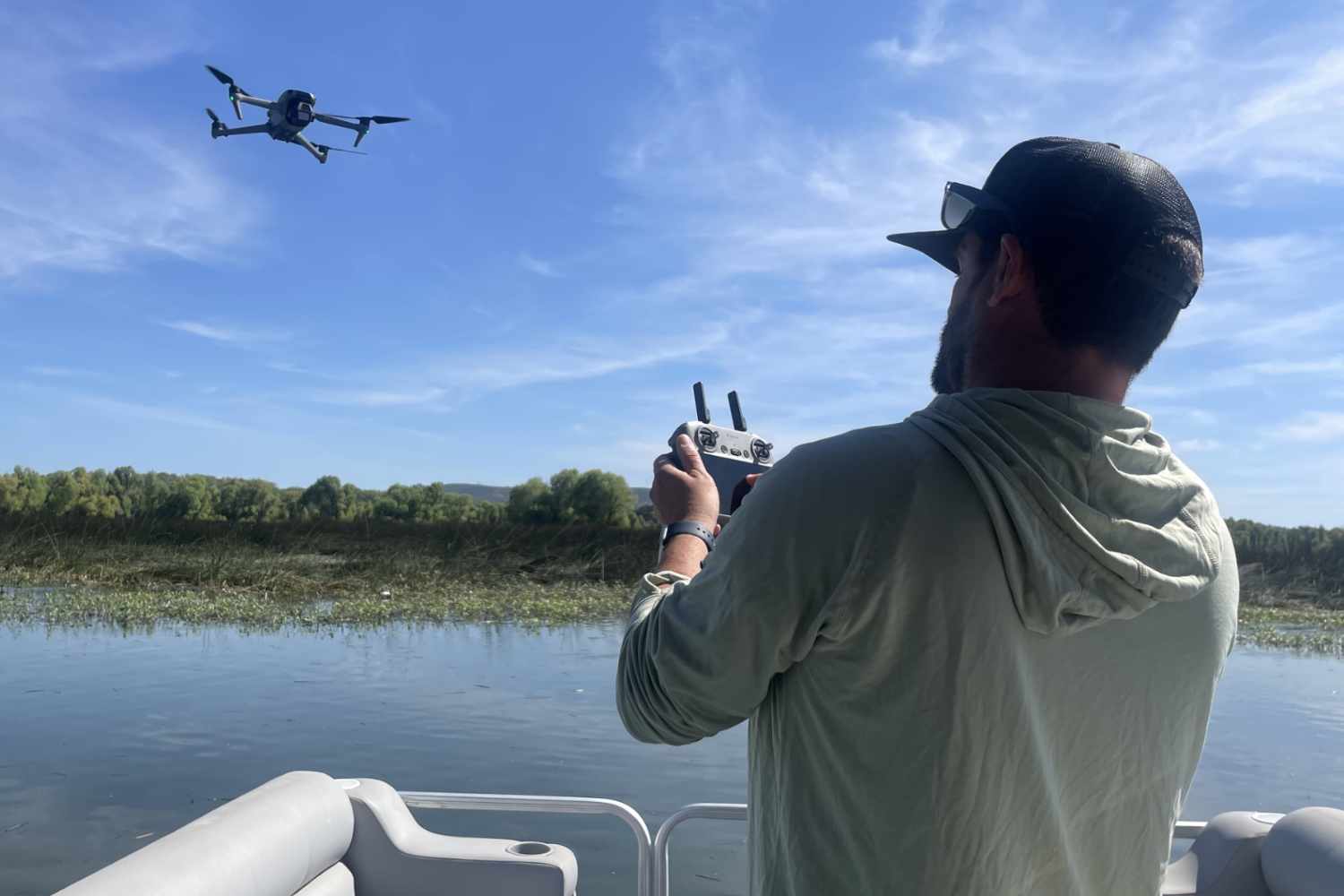
Led by Pacific Union College Scientist in Residence, Dr. Scott Butterfield, a new grebe monitoring project has literally taken "flight" over Clear Lake. Funded by a multi-year grant from the California Natural Resources Agency, and in collaboration with the Blue Ribbon Committee for the Rehabilitation of Clear Lake, Redbud Audubon Society, Robinson Rancheria, Big Valley Band of Pomo Indians, Lake County Land Trust, Anderson March Interpretive Association, California State Parks, and Upper Lake, Lower Lake, and Clear Lake High Schools, the project is focused on developing new drone-based methods that will allow Dr. Butterfield and high school students from across Lake County conduct annual monitoring of grebes, their nests, eggs, and hatchlings at Clear Lake and to help tell the story about how restoration efforts currently happening at Clear Lake are impacting these iconic bird species.
This year, like many in the past, the grebes of Clear Lake are tucked into channels and within and behind wetland vegetation that is hard to access, even with kayaks and boats. Over the Memorial Day weekend, American Medical Informatics Association (AMIA) Board members Gae Henry and Henry Bornstein used their pontoon boat to carefully guide Dr. Butterfield and his collaborator Donna Mackiewicz from Redbud Audubon Society into a grebe nesting area in Anderson Marsh, located at the southern end of Clear Lake, where they launched the first drone for this project over Anderson Marsh.
Flying a drone over a protected Natural Preserve such as Anderson Marsh is illegal without a permit such as the one granted to Dr. Butterfield for his research. With Dr. Butterfield flying the drone, Mackiewicz acting as his drone and grebe behavior observer, and Henry and Bornstein keeping the boat in position, the drone was flown 150 feet above the grebes, confirming previous findings that at this altitude, the grebes acted as if they had no idea they were being filmed from high above.
The first videos and still photos taken by the drone that day revealed over 5,000 grebe nests in the Marsh, indicating there are more than 10,000 Clark's and Western Grebes in the Anderson Marsh breeding colony this year. Lake County high school students trained by Dr. Butterfield will help apply more structured counting methods using Geographic Information Systems (GIS) and test whether artificial intelligence can automate some of the counts over time.
The drone was able to fly deep into the marsh, behind tules and other wetland vegetation, to see grebes and grebe nests in places no one would be able to monitor visually, confirming high nest counts that support the informal estimates about grebe populations in Anderson Marsh that have been made by observers such as Henry and Bornstein for years.
When monitoring was done for the day, Dr. Butterfield had one last challenge ahead of him: to safely land the drone. With the boat having drifted away from the "home" site that the drone "recognized" as the launch site, and with low battery warnings echoing from the drone, Dr. Butterfield had one chance to land the drone on “dry land” and did so, setting the drone down on top of the boat's Bimini top!
Dr. Butterfield and his team have since monitored the Anderson Marsh population multiple times, allowing them to track changes in the grebe populations over the summer. Anderson Marsh is traditionally one of the three largest grebe colonies at Clear Lake together with Rodman Slough and locations in the Upper Arm near Lakeport. All past grebe monitoring efforts at Anderson Marsh and Clear Lake have been done visually from boats, kayaks, and the shore, including the 10-year study published by Dr. Floyd Hayes in 2022. These studies have documented annual variability in grebe populations driven by precipitation, lake water levels, prey fish availability, and other factors, but generally a steady increase in populations, to a high of close to 6000 grebe nests - Clear Lake-wide - in the mid-2010s, as Clear Lake rehabilitation has happened over the last more than 20 years.
On July 22, Dr. Butterfield and his team spent a beautiful day at the newly expanded Kuhlanapo Wetland Preserve in Lakeport, owned by the Lake County Land Trust, to conduct drone flights to count nests in this location. Dr. Butterfield found approximately 2,710 nests off the shores of the preserve. Together with the Anderson March and Clear Lake Oaks sampling efforts, Dr. Butterfield and the team have documented more than 7,500 nests, which surpasses the highest counts Dr. Hayes found during his study.
This project is somewhat unique to other research and monitoring projects because it is being co-developed with local Lake County high schools and as part of PUC classes in Conservation Technology, Environmental Science, and Conservation Biology, to have the drones, the methods, and monitoring program live within drone and environmental clubs, classes, and curriculum, developed as part of this project, establishing a sustainable - and collaborative - monitoring program that engages and inspires local students and the local community. Dr. Butterfield and his team want this project to increase the local community's understanding over time of how special the lake, its plants, and its animals are, and how they can contribute to its healthy future. PUC students enrolled in Conservation Technology this fall will begin helping to analyze these data and to develop and test artificial intelligence-based algorithms to make counting these huge colonies easier over time.
Latest News
Pacific Union College Welcomes Brandon Broome as New Athletic Director
By Marina Maher on October 5, 2026
PUC Alumna Creates Bible Busy Boards
By Ally Romanes on October 1, 2026
PUC Appoints Anthony Cadavid as MBA Director
By Ally Romanes on September 30, 2026
Abraham Garrido's 100-Mile Race in Europe
By Marina Maher on September 28, 2026